Building Community, Connection and Impact: The Story Behind Cancer Fund for Children’s Daisy Lodge in Co. Mayo
A major capital campaign by Cancer Fund for Children shows what is possible when philanthropy, corporate partners, statutory funding and public generosity come together around an urgent need. OKC is privileged to work with Cancer Fund for Children on this campaign and its engagement with philanthropic and corporate partners - here we take a look at the story behind Daisy Lodge, Co. Mayo.
September is Childhood Cancer Awareness Month. But for children, young people and families living with a cancer diagnosis, the impact of cancer is felt every day of the year.
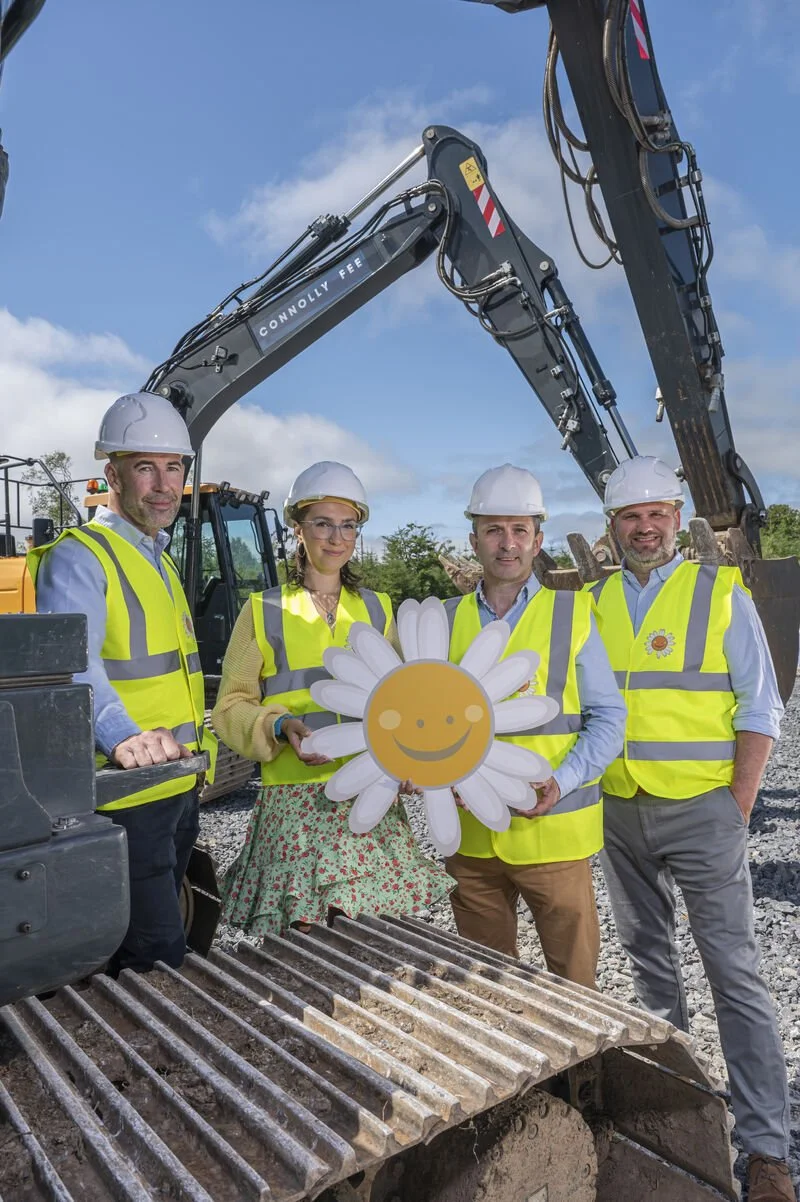
For Cancer Fund for Children (CFFC), this September marks an important moment. In Cong, Co. Mayo, the second Daisy Lodge is rapidly taking shape. This purpose-built therapeutic short break centre will support children and young people diagnosed with cancer, and their families, from across the island of Ireland.
The roof is on, window frames are being installed, and inside, floors have been poured, rooms are taking shape and the main wooden staircase is already in place. But the building is only the beginning of the story.
When Daisy Lodge, Co. Mayo opens in 2027, it will enable Cancer Fund for Children to significantly increase the number of children and parents it can support each year, from around 1,800 to 4,000.
It is also a powerful example of what a successful capital campaign can achieve: bringing together a compelling vision, significant philanthropic investment, corporate partnership, statutory support and an extraordinary groundswell of public fundraising.
The Need Behind the Build
Cancer does not affect a child in isolation. Its impact is felt throughout family life, emotionally, practically and financially, during treatment and long afterwards.
Cancer Fund for Children’s existing Daisy Lodge in Newcastle, Co. Down provides families with a place away from hospitals and appointments, where they can spend quality time together while accessing specialist therapeutic and emotional support. Demand, however, far exceeds capacity.
Currently, CFFC can provide a therapeutic short break to only around one in seven families from across the island of Ireland who could benefit. At any one time, more than 50 families are waiting for an opportunity to stay at Daisy Lodge in Newcastle.
The experience of young people such as Ella, whose story features in CFFC’s latest Impact Report, brings the importance of that support into focus.
At just 20, Ella was diagnosed with an aggressive brain tumour. Within five days, she went from her final term at college to hospital, brain surgery and a life suddenly shaped by appointments. Her treatment included six weeks of proton beam therapy followed by 48 consecutive weeks of chemotherapy. When Ella attended a young adult short break at Daisy Lodge in Newcastle in October 2024, it was the first time she had met other young adults who had also been diagnosed with cancer.
As Ella describes it: “Daisy Lodge was like a getaway from chemotherapy and hospital appointments.”
The experience gave her an opportunity to connect with people her own age who understood what she had been through. Those connections, she says, have become “strong bonds that I will carry with me forever.”
It is this kind of experience that CFFC wants to make available to many more children, young people and families.
Building a place for families to simply be families
The new Daisy Lodge has been designed around the needs of children and families, with children and young people themselves contributing ideas for its playrooms, games room and communal areas.
The centre will include double en-suite family rooms, outdoor play areas, a cinema, wellbeing centre and therapy rooms. These spaces are being created to encourage activity, creativity, relaxation and connection – giving children undergoing cancer treatment the opportunity to simply be children in a safe and supportive environment.
Families will also be able to enjoy freshly prepared meals together, removing some of the everyday practical and financial pressures that can become overwhelming during cancer treatment. As CFFC CEO Phil Alexander puts it:
“It is impossible to fully capture, through words or photographs alone, what Daisy Lodge, Mayo will mean for children and families affected by cancer.”
CFFC’s latest Impact Report also makes an important point for anyone involved in capital fundraising: the building is only the beginning.
Once Daisy Lodge opens, CFFC estimates that it will require approximately €1.5 million every year to provide specialist therapeutic programmes, activities, meals and care to families free of charge. A successful capital campaign therefore has to do more than fund bricks and mortar. It needs to create a community of supporters who believe in the organisation’s vision and are invested in its long-term impact.
Philanthropy, business, government and community fundraising working together
One of the defining features of the Daisy Lodge campaign has been its blended approach to funding.
The project has attracted seven-figure philanthropic support from donors in Ireland and the United States alongside significant corporate and statutory support, including Shared Island and HSE funding.
Its all-island character has been central to that story. Cancer Fund for Children supports children and families across the island of Ireland. Locating its second Daisy Lodge in Co. Mayo creates additional capacity in the west while strengthening that all-island model of support.
Turning a capital campaign into a movement
The Daisy Lodge campaign has also benefited from people willing to lend their voice, networks and profile to the cause. Former Taoiseach Enda Kenny took on the voluntary role of International Ambassador for the Daisy Lodge appeal. Describing CFFC’s engagement with families affected by childhood cancer as “extraordinary”, he has helped raise awareness of the need for the new facility in Mayo and the wider all-island vision behind it.
That advocacy has been complemented by an extraordinary programme of public fundraising. Perhaps its most visible expression has been Rory’s Miles to Mayo. Former Ireland and Ulster rugby captain Rory Best has put extraordinary energy behind the campaign.
This September, the third and final chapter of Rory’s Miles to Mayo saw Rory captain a team of 22 business leaders on an extraordinary journey across the island of Ireland: nine marathons in nine days.
Starting in Derry, the challenge travelled through Belfast, Dublin, Kildare, Carlow, Cork, Limerick and Galway before reaching its final destination in Cong, Co. Mayo. The route itself told the story of Daisy Lodge: an all-island project bringing people and communities together behind children and families affected by cancer. And the response has been remarkable.
Rory’s Miles to Mayo – The Trilogy raised €1.7 million / £1.45 million, bringing the total raised across all three challenges to €4.2 million / £4 million.
But the numbers tell only part of the story. The challenge was powered by people - the participants who walked; supporters who cheered from the sidelines; volunteers and CFFC staff; individuals who donated and shared the campaign; and businesses and organisations that provided sponsorship, food, refreshments and supplies along the route. Corporate partners also played an important role, with Arachas Corporate Brokers and Kingsbridge Healthcare Group supporting the final challenge.
What began as a fundraising challenge became a highly visible expression of collective commitment to Daisy Lodge and the families it will serve. It also demonstrates something important about capital fundraising. The strongest campaigns can become much more than campaigns to fund a building. The physical project provides a focal point around which people can gather. A donor can fund it. A company can support it. A volunteer can give their time. A fundraiser can walk for it. A community can get behind it.
In doing so, the capital project becomes something people feel part of and unites people for a shared social purpose.
At last week’s Daisy Ball, Cancer Fund for Children CEO Phil Alexander said:
“Next spring, Daisy Lodge Mayo, in Co. Mayo, will open its doors to families from across the island of Ireland. This is about far more than a building. It will give children the chance to be children again, give families precious time together, and create space to breathe when cancer has changed everything. Through the generosity of our donors, Daisy Lodge Mayo will create more opportunities for families affected by cancer to find connection, support and time together when they need it most.
On the night, Cancer Fund for Children also shared an exciting update on the progress of Daisy Lodge, Cong, which you can see here.
A legacy measured in moments
There is an impressive building emerging in Cong. But its ultimate impact will not be measured in square metres. It will be measured in families eating dinner together without worrying about the cost. In children having somewhere safe to play. In parents getting a chance to rest. In young people meeting somebody their own age who understands what they are going through.
Cancer Fund for Children describes hospitality at Daisy Lodge as an “act of care” – creating the conditions in which families can feel safe enough to rest, connect, grieve, laugh and prepare for the next stage of their journey. One parent, who has spent time at Daisy Lodge in Newcastle, captures what that can mean:
“In these walls, we found laughter again. We found rest. We found space to just be us, a family making happy memories.”
That is ultimately the case for support behind Daisy Lodge. The campaign demonstrates the potential of ambitious philanthropy when the need is clear, the vision is tangible and different sources of funding are aligned behind a common purpose.
Major donors, businesses, government, fundraisers and communities have each played a different role. Collectively, they are helping Cancer Fund for Children create something that none could deliver alone.
When Daisy Lodge, Co. Mayo opens its doors, the capital campaign will have created a remarkable building.
Its more important legacy will be what happens inside it: more children and families given the time, space and support to be together when they need it most.